How I Smartly Grow My Travel Fund Without Risking a Dime
What if you could travel more without draining your savings? I used to think "dream trips" meant debt or years of penny-pinching—until I shifted my approach. It’s not about earning more; it’s about working smarter with what you have. In this piece, I’ll walk you through the real financial methods I use to grow my travel fund steadily, safely, and without stress. No get-rich-quick schemes—just practical, proven strategies that protect your money while helping you see the world. These are not speculative gambles or complex Wall Street tricks. They’re grounded in sound financial principles, designed for people who value peace of mind as much as passport stamps. If you’ve ever postponed a trip because the cost felt out of reach, this guide will change how you think about saving for travel—forever.
The Hidden Cost of Waiting: Why Your Travel Fund Loses Value Over Time
Many people believe they’re being cautious by keeping their travel savings in a regular savings account. They watch the balance stay the same—or grow slightly—and feel secure. But there’s a hidden danger in this approach: inflation. Every year, the general price level of goods and services rises, which means each dollar you hold buys a little less than it did the year before. When your money sits in a low-interest account, its real purchasing power declines over time. This is not a hypothetical risk—it’s a quiet erosion that can significantly impact long-term goals like international travel.
Consider this: if you saved $5,000 today for a trip five years from now, and inflation averages just 3% per year, that same amount will only have the spending power of about $4,310 in today’s dollars. In practical terms, that could mean the difference between staying in a comfortable mid-range hotel or being limited to budget accommodations. It might mean skipping a guided tour or cutting short your itinerary. The dream doesn’t change—but your ability to afford it quietly shrinks. This is the cost of financial stagnation, and it’s one of the most overlooked threats to travel planning.
The solution isn’t reckless investing. It’s strategic placement. Even modest returns from safe financial instruments can offset inflation and preserve your fund’s value. For example, earning 3.5% annually on that $5,000 over five years—through conservative vehicles like short-term government bonds or high-yield savings accounts—would grow the balance to approximately $5,938. After adjusting for inflation, you’d still come out ahead in real terms. The key insight is that doing nothing carries risk, and safety should not be confused with inaction. Protecting your money means ensuring it keeps pace with the world’s rising costs, not just shielding it from market swings.
This understanding shifts the entire mindset around travel savings. Instead of viewing your fund as a static pool of money, think of it as a dynamic asset that should work for you. The goal isn’t to chase high returns but to prevent silent loss. By acknowledging inflation as a real and measurable force, you begin to see that even small improvements in yield can have a meaningful impact. The journey to smarter travel funding starts with this realization: waiting is not neutral. Every year you delay optimizing your savings, you’re effectively paying a cost—one that could have been avoided with thoughtful, low-risk planning.
Rethinking "Safe" Investments: Where to Park Your Travel Money
When people hear the word "investment," they often imagine volatile stocks or complex financial products. But for travel savings, the goal isn’t high growth—it’s preservation with gentle appreciation. The right place for your travel fund is not under the mattress, nor in speculative assets, but in instruments that offer stability, liquidity, and a modest return. These tools are often overlooked because they’re not flashy, but they’re essential for long-term financial health. The key is to understand that safety and return are not opposites—they can coexist when you choose the right vehicles.
One of the most reliable options is the high-yield savings account. Unlike traditional savings accounts that offer near-zero interest, these are offered by online banks with lower overhead, allowing them to pass savings to customers. Yields fluctuate with the broader interest rate environment, but over the past few years, they’ve consistently outpaced inflation. These accounts are FDIC-insured up to $250,000, meaning your principal is protected. More importantly, your money remains accessible, which is crucial when planning trips. You can transfer funds easily when booking flights or accommodations, without penalties or delays.
Another strong option is the money market fund. These are mutual funds that invest in short-term, high-quality debt securities like Treasury bills and commercial paper. They aim to maintain a stable net asset value of $1 per share while generating slightly higher returns than standard savings accounts. While not FDIC-insured, they are considered low-risk due to their conservative holdings and daily liquidity. For travelers who want a bit more yield without sacrificing access, money market funds offer a balanced compromise. They’re especially useful when interest rates are rising, as their yields often adjust quickly.
Short-term Treasury securities, such as Treasury bills (T-bills), are also excellent choices. Backed by the full faith and credit of the U.S. government, they are among the safest investments available. You can buy T-bills directly through TreasuryDirect.gov with maturities ranging from four weeks to one year. Because they’re sold at a discount and pay face value at maturity, the return is predictable and tax-efficient at the federal level. For someone planning a trip 6 to 12 months out, a T-bill ladder can align perfectly with their timeline. These instruments don’t promise spectacular gains, but they do deliver reliability—something every traveler should value.
The common thread across these options is that they prioritize capital preservation while generating a return that outpaces inflation. They’re not designed to make you rich overnight, but to ensure your travel fund retains its strength. The real mistake many make is equating safety with zero return. That mindset leads to missed opportunities and gradual loss of purchasing power. By redefining what it means to invest safely, you open the door to smarter financial habits. The goal isn’t to take on risk—it’s to stop losing ground. When your money is placed in the right vehicle, it can grow steadily, quietly, and securely, setting the foundation for the trips you’ve always wanted.
Laddering for Liquidity: Timing Your Returns Around Travel Plans
One of the biggest challenges in saving for travel is timing. You don’t want to lock up all your money too early and lose access when an opportunity arises, but you also don’t want to leave it idle and miss out on growth. This is where the concept of laddering becomes powerful. A financial ladder involves spreading your investments across multiple maturities so that portions of your fund become available at regular intervals. It’s a strategy commonly used by retirees, but it’s equally effective for travelers who want predictable access to cash without sacrificing returns.
Imagine you’re planning a series of trips over the next three years. Instead of putting all your travel savings into a single one-year certificate of deposit, you divide the amount into three parts. The first third goes into a 6-month T-bill, the second into an 18-month note, and the third into a 30-month bond. As each instrument matures, you can use the funds for an upcoming trip or reinvest them if your plans change. This staggered approach ensures that you’re never stuck with all your money tied up at once. It also reduces the pressure to time the market or make rushed financial decisions.
Laddering offers another important benefit: it smooths out interest rate risk. If you invest everything at once during a period of low rates, you’re stuck with that return even if rates rise later. But with a ladder, as each rung matures, you can reinvest at the current market rate. Over time, this creates a more stable and potentially higher average yield. For example, if interest rates increase over the next two years, your later reinvestments will capture those higher returns, boosting your overall growth. This flexibility is especially valuable in uncertain economic environments.
Building a ladder doesn’t require large sums of money. Even with $3,000, you can create a simple three-tier structure—$1,000 in a 6-month, 12-month, and 18-month instrument. As each matures, you can either spend it on travel or roll it into a new long-term rung if your plans shift. This system turns your savings into a dynamic tool rather than a static number. It also encourages disciplined saving, as you’re more likely to stick with a plan that gives you regular milestones and access points.
The beauty of laddering is that it aligns your financial strategy with your life rhythm. Travel dreams don’t happen all at once—they unfold over time. A well-structured ladder supports that reality. Whether you’re planning a summer getaway, a winter escape, or a once-in-a-lifetime journey, having funds available when you need them reduces stress and increases freedom. It’s not about chasing returns—it’s about designing a system that works with your schedule, not against it. When your money matures in sync with your plans, travel becomes not just possible, but predictable.
Automating Growth: How Systems Beat Willpower Every Time
Most people rely on willpower to save for travel. They promise themselves they’ll “set aside money when they can” or “skip a few purchases.” But life gets busy, expenses pop up, and those good intentions fade. The truth is, willpower is unreliable. What works far better is a system—a set of automatic processes that move money without requiring constant decisions. Automation transforms saving from an act of discipline into a seamless habit, and that’s where real progress happens.
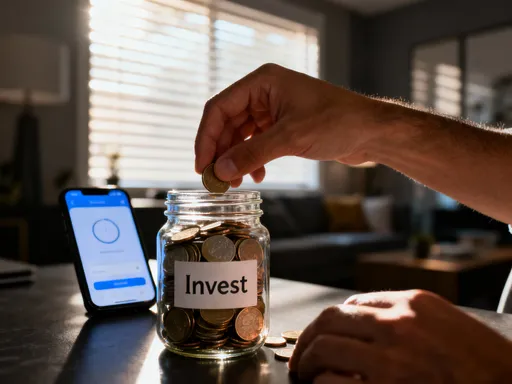
The foundation of this system is automatic transfers. As soon as your paycheck hits your account, a predetermined amount is moved to your travel savings. This could be a fixed dollar amount or a percentage of your income. The key is that it happens before you have a chance to spend it. This method, often called “paying yourself first,” ensures that saving is a priority, not an afterthought. Over time, these small, regular contributions compound, growing your fund steadily without feeling like a burden.
Many banks and credit unions allow you to schedule recurring transfers between accounts. You can set it up to occur weekly, biweekly, or monthly—whatever matches your pay cycle. Some even offer round-up features, where debit card purchases are rounded up to the nearest dollar and the difference is deposited into a savings account. While the individual amounts seem small, they add up quickly. A family spending $50 a day could accumulate over $180 per year just from rounding up—enough for a nice dinner abroad or a local experience on their next trip.
Automation also reduces decision fatigue. Every financial choice you make during the day—what to buy, what to skip—drains mental energy. When saving is automatic, you eliminate one more decision. This creates a psychological advantage: you’re no longer in a constant battle with yourself. Instead, you build momentum. Seeing your travel fund grow month after month reinforces positive behavior and makes the goal feel more real. It’s not just a number on a screen—it’s progress you can track and celebrate.
Another powerful tool is earmarking. By giving your savings account a clear name—like “Paris 2025” or “Beach Escape Fund”—you create an emotional connection to the goal. Research shows that people are more likely to stick with financial plans when they can visualize the outcome. Automation combined with purpose turns abstract saving into a meaningful journey. You’re not just moving money—you’re building an experience.
The real power of automation lies in consistency. A $50 monthly transfer may not seem like much, but over five years, it becomes $3,000—plus interest. If that same amount earns 3% annually, the total grows to nearly $3,230. Small actions, repeated over time, create significant results. And because the system runs in the background, it fits naturally into a busy life. You don’t have to remember, decide, or struggle. You just live your life—and your travel fund grows with you.
Cutting the Noise: Avoiding Trends That Risk Your Travel Dreams
In today’s world, financial headlines are dominated by stories of overnight fortunes—crypto surges, meme stocks, and “can’t-miss” opportunities. It’s easy to feel left behind, especially when you’re working patiently toward a goal like travel. The temptation to chase high returns can be strong. But history shows that emotional investing rarely ends well. For every success story, there are countless others who lost savings by jumping on the latest trend. Protecting your travel fund means learning to ignore the noise and stay focused on what truly works.
One of the biggest dangers is the promise of quick results. Investments that claim to double your money in months—or weeks—are almost always too good to be true. They often lack transparency, have no track record, or rely on recruiting others rather than generating real value. These are not investments; they’re speculation at best, and scams at worst. When you divert travel savings into such ventures, you’re not taking a smart risk—you’re gambling with your goals. And unlike the stock market, where losses can be recovered over time, a lost travel fund means missed experiences that can’t be reclaimed.
Another red flag is illiquidity. Some high-yield products lock up your money for years, with penalties for early withdrawal. That might work for long-term retirement goals, but it’s a poor fit for travel. Your plans can change—a destination becomes unsafe, a family event arises, or a better opportunity appears. If your money is trapped, you lose flexibility. A sound travel fund must remain accessible. That doesn’t mean it should sit in cash, but it shouldn’t be tied up in something you can’t touch when life happens.
The emotional toll of speculative investing is also worth considering. Watching a risky asset plummet in value creates stress, anxiety, and regret. That’s the opposite of what travel is supposed to be about—freedom, joy, and relaxation. When your savings are in stable, predictable instruments, you can plan your trip with confidence. There’s no second-guessing, no sleepless nights. You know exactly what you have and what you can afford. That peace of mind is priceless.
Staying disciplined doesn’t mean being boring. It means being intentional. The most successful travelers aren’t those who take big financial risks—they’re the ones who plan wisely, save consistently, and avoid distractions. They understand that slow and steady isn’t a compromise—it’s a strategy. By tuning out the hype and focusing on proven methods, you protect not just your money, but your dreams. The world will still be there when you’re ready. The question is whether your fund will be.
Currency Smarts: Preparing for Global Spending Without Guesswork
Building a travel fund is only half the battle. The other half is using it wisely once you reach your destination. One often-overlooked factor is currency exchange. Many travelers wait until they arrive to convert money, only to discover high fees and poor rates. These hidden costs can drain hundreds of dollars from a trip without most people even realizing it. Smart travelers don’t leave exchange to chance—they plan it as part of their financial strategy.
Currency values fluctuate daily based on global markets. If you wait to exchange all your money at once, you’re subject to whatever rate is available that day. But by monitoring trends and exchanging in stages, you can reduce risk and improve your average rate. This doesn’t require being an expert—it just means paying attention. For example, if the euro has been weak for several weeks, it might be a good time to buy some before your trip. Spreading exchanges over time smooths out volatility, much like dollar-cost averaging in investing.
Another effective tool is the multi-currency bank account. Some financial institutions offer accounts that let you hold and manage money in multiple currencies. You can transfer funds ahead of time and convert them when rates are favorable. This eliminates the need to carry large amounts of cash and reduces reliance on airport exchange booths, which often have the worst rates. These accounts also make it easier to budget in the local currency, giving you a clearer picture of your spending.
Prepaid travel cards are another practical option. These cards can be loaded with foreign currency at a locked-in rate, protecting you from sudden drops in value. They’re accepted at most merchants and ATMs abroad and often come with lower transaction fees than regular credit cards. Many also offer fraud protection and the ability to freeze or replace the card if lost. For families or couples traveling together, multiple cards can be linked to a single account, making it easier to manage shared expenses.
The key is to treat currency exchange as a planned step, not an afterthought. Just as you research accommodations and activities, you should plan your money conversion strategy. A little effort upfront can save significant money and stress later. When you arrive at your destination with funds already in the local currency, you can focus on enjoying the experience—not worrying about fees. That’s what true financial preparedness looks like.
Putting It All Together: Building a Travel Fund That Works While You Live
Creating a travel fund that grows safely and reliably isn’t about finding a single magic solution. It’s about combining several smart practices into a cohesive system. When you align inflation protection, safe investments, strategic timing, automation, and currency planning, you create a financial ecosystem that supports your dreams without requiring sacrifice or risk. The goal isn’t to live frugally now so you can travel later—it’s to live fully now while preparing for adventures ahead.
Start by assessing your current savings approach. Are your funds sitting in a low-yield account, losing value to inflation? Could you move them to a high-yield savings account or short-term bonds for better returns? Next, consider your timeline. Are your trips short-term, mid-term, or long-term? This will determine whether a simple savings plan or a laddering strategy is more appropriate. Then, set up automation so your contributions happen without effort. Even small amounts, when consistent, build meaningful results over time.
As your fund grows, stay disciplined. Avoid the temptation to chase trends or move money into speculative assets. Keep your focus on preservation and gradual growth. And when your trip approaches, plan your currency exchange in advance to maximize value. Each of these steps reinforces the others, creating a cycle of financial confidence and freedom.
Ultimately, the best travel fund is one that lets you sleep well at night. It’s not built on hype or hope, but on logic, patience, and intentionality. It respects your time, your money, and your dreams. You don’t need to be a financial expert to make this work. You just need to start, stay consistent, and avoid common pitfalls. The world is full of beauty, culture, and connection. With the right financial approach, those experiences don’t have to wait. They can become a regular part of your life—funded not by luck, but by smart, steady choices that add up to a richer journey, in every sense of the word.