We used to miss each other at home: How a simple app brought us closer every day
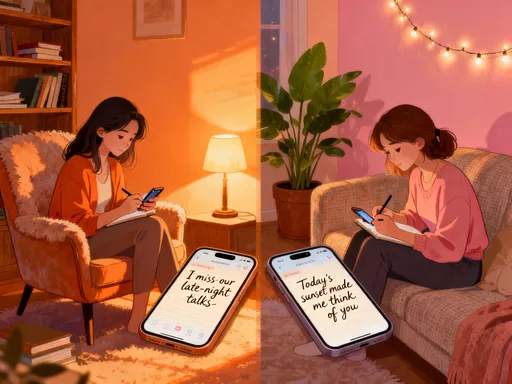
Staring at my phone after another quiet dinner, I realized something was off. My partner and I were living under the same roof, yet we felt miles apart. It wasn’t anger or distance—it was the slow fade of connection, drowned in routines and notifications. Then we tried something small: a social platform we already used, but differently. Over months, tiny digital moments rebuilt our daily intimacy. This isn’t about grand gestures. It’s how a few thoughtful features, used with intention, quietly transformed the way we communicate—and how love can grow stronger, one shared moment at a time.
The Quiet Drift: When “Together” Starts to Feel Alone
Have you ever sat across from someone you love, sharing a meal, both of you quiet—not because you’re upset, but because you’re just… elsewhere? That was us. Not fighting, not drifting apart in any dramatic way, but slowly losing the rhythm of each other. We’d come home from work, exchange a few words, then settle into our corners: me folding laundry while scrolling through messages, him checking emails on the couch. The house was warm, the fridge full, the kids asleep—but something inside felt hollow.
It wasn’t until I caught myself smiling at a photo on my phone—sent by a friend across the country—while barely noticing the man beside me that I paused. How could I feel so connected to someone far away, yet so distant from the person right here? That moment wasn’t about blame. It was a quiet wake-up call. We weren’t bad partners. We weren’t unloving. We were just caught in the current of modern life—busy, distracted, and forgetting to show up for each other in small, steady ways.
This kind of emotional drift doesn’t come with warning signs. There’s no argument, no ultimatum. It’s the slow erosion of shared moments—the joke you don’t tell because you’re tired, the thought you don’t share because you assume they’re busy, the look across the room that never happens because both of you are looking down. And over time, those missed connections add up. You start to feel like roommates with a shared calendar instead of partners building a life. I know I wasn’t alone in this. So many women I’ve talked to—mothers, wives, daughters balancing it all—say the same thing: 'We’re together, but I feel alone.'
Finding Connection in the Noise: Why We Turned to Social Platforms
When I first suggested using a social app to feel closer, my partner raised an eyebrow. 'Isn’t that what’s pulling us apart?' he asked. And he wasn’t wrong. We’d both seen how endless scrolling, endless notifications, and the pressure to present a perfect life online could make real life feel duller. But what if we used the same tools differently? What if, instead of letting the app distract us, we let it remind us?
We didn’t need a fancy new gadget or a weekend retreat (though those can help, no judgment). What we needed was something simple, something already in our pockets. So we looked at the apps we used every day—not for likes or followers, but for connection. We started small. I sent him a photo of my morning coffee with a caption: 'Wishing you were here to steal sips like you always do.' He responded with a voice note: 'You make it too strong, but I’d still take one.' It was silly. It was light. But for the first time in weeks, we were sharing a moment, not just space.
The shift wasn’t in the technology. It was in the intention. We stopped seeing the app as a distraction and started seeing it as a bridge. A private message wasn’t just for logistics ('Pick up milk')—it could also say, 'Saw this flower and thought of your mom’s garden.' A shared story wasn’t just for showing off—it became a way to say, 'I’m thinking of you right now.' We didn’t delete the noisy parts of social media, but we carved out a quieter corner just for us. And in that corner, we began to remember how to listen, how to notice, how to care in real time.
The Morning Ritual That Changed Everything
Our biggest breakthrough came from the smallest habit: a daily voice note before work. No long speeches. No deep heart-to-hearts. Just 30 seconds. 'Good morning. Sun’s out. Dog barked at the mailman again. Hope your meeting goes well.' That was it. But those little messages became the heartbeat of our day.
At first, it felt a little awkward. We’re not big texters, and we rarely call during work hours. But voice notes were different. They carried tone. A laugh. A yawn. A sigh. You could hear the smile, or the stress, or the peace. And that changed everything. Instead of guessing how the other was doing, we got a real-time glimpse. I’d hear the clink of his mug in the background and feel like I was there. He’d send a note from the parking garage and say, 'Just needed to hear your voice before this long day.' And suddenly, we weren’t just two people surviving the week—we were two people walking it together.
What surprised me most was how these micro-moments built anticipation. I’d wake up looking forward to his message. I’d save mine until I had a quiet moment, so it wouldn’t sound rushed. We weren’t performing. We weren’t trying to impress. We were just being real. And over time, that consistency created emotional safety. We knew we could share a bad mood, a silly thought, or just silence, and it would be received with care. The app didn’t create the connection—but it gave us a gentle, daily rhythm to express it.
Shared Spaces, Shared Lives: Using Private Features to Feel Closer
Most of us use social apps in public ways—posting to feeds, sharing with hundreds. But the real magic, we found, was in the private corners. We created a small, locked space just for us: a private photo album, a close-friends story list, a messaging thread with no one else. This wasn’t for show. It was our digital living room.
In that album, we started dropping little pieces of our day. A photo of my messy desk with the note: 'Survived the school bake sale.' A snap of his worn-out shoes after a long shift. A sunset from my walk, a grocery list scribbled on paper, the dog sleeping in a sunbeam. None of these were 'perfect' moments. But they were real. And seeing them—knowing he was sharing them with me—made me feel included. Even on days when we barely saw each other, I could open that album and feel close.
These small visuals did something powerful: they built empathy. When I saw his tired eyes in a selfie before bed, I didn’t just think, 'He’s late again.' I thought, 'He’s carrying a lot.' When he saw my chaotic kitchen after helping the kids with homework, he didn’t say, 'Why is it so messy?' He sent a voice note: 'You’re amazing, you know that?' These glimpses softened us. They reminded us that we weren’t just partners in chores and bills—we were partners in life, with all its beautiful mess.
And here’s the thing: we didn’t need to be together to feel together. That album became our shared journal, our quiet love letter, our way of saying, 'I see you. I’m here.'
Conflict Without Confrontation: How Text-Based Check-Ins Eased Tension
Let’s be honest—some conversations are harder face-to-face. Tone gets lost. Voices rise. Defenses go up. We’ve all had those moments where we say something we don’t mean, or shut down because we feel attacked. We wanted to do better. So we started using the app for gentle check-ins when something felt off.
Instead of bringing up a tense moment at dinner—when we’re both tired and the kids are loud—we’d send a simple message later: 'Can we talk about earlier? I just want to understand.' That small pause made all the difference. It gave us space to breathe, to reflect, to come back with care instead of reaction. We weren’t avoiding the conversation—we were preparing for it.
Text, when used with thought, can actually help. We learned to pay attention to tone. A period at the end can feel cold. A well-placed emoji—a soft smile, a heart, even a silly sticker—can ease the mood. We’d say, 'I felt a little hurt when…' instead of 'You always…' We’d ask, 'Was that a bad time?' instead of assuming. And we’d wait for a response, not demand one.
One night, after a quiet disagreement about weekend plans, I sent a voice note: 'I think I came off too strong. I just wanted us to have time together, not add stress.' He replied an hour later: 'I heard that. I was just worried about work. Let’s figure it out tomorrow.' No blame. No drama. Just two people trying to connect, even when it’s hard. The app didn’t fix the tension—but it gave us a calmer, kinder way to move through it.
Building a Habit, Not a Dependency
Here’s what I’ve learned: technology doesn’t fix relationships. People do. The app didn’t save us—it supported us. And that only worked because we set boundaries. No phones at the dinner table. No late-night arguments over text. No sharing private moments publicly. We protected our real-life connection while using the digital one to enhance it.
We also made sure the app was a supplement, not a substitute. We still have date nights. We still talk in person. We still sit together in silence sometimes—because not every moment needs to be documented or shared. The goal wasn’t constant contact. It was meaningful contact. We wanted to feel closer, not more addicted.
Over time, something beautiful happened: our digital habits started strengthening our in-person ones. Because we were checking in more during the day, our evening conversations felt lighter, warmer. Because we were sharing small joys, we were more present for the big ones. Because we were practicing kindness in texts, we were quicker to offer it in person. The app became a training ground for love—a place to practice the small acts of care that build a strong, lasting bond.
Love in the Time of Notifications: What We’ve Learned After a Year
A year later, we’re not perfect. We still have busy days. We still forget to charge the phone. We still get tired and cranky. But we’re more present. More aware. More intentional. And that’s made all the difference.
What we’ve learned isn’t about tech. It’s about love. Real love isn’t grand gestures or perfect moments. It’s the daily choice to show up. To say, 'I see you.' To share a silly voice note. To send a photo of your coffee. To ask, 'How are you, really?' And to mean it.
The app gave us tools, but we gave it meaning. We took something designed for noise and turned it into a space for quiet connection. We used a platform built for sharing with the world to deepen our world with each other. And in doing so, we remembered what we’d almost forgotten: that love grows not in the big moments, but in the small ones we choose again and again.
If you’re feeling that quiet drift, I get it. It’s easy to assume that if there’s no fight, there’s no problem. But sometimes, the deepest need isn’t for a solution—it’s for a moment. A message. A voice. A photo of your partner’s shoes by the door, sent just because. Try it. Not to fix everything at once, but to say, 'I’m here. I care. Let’s grow closer, one small moment at a time.'